Leadership Dynamics
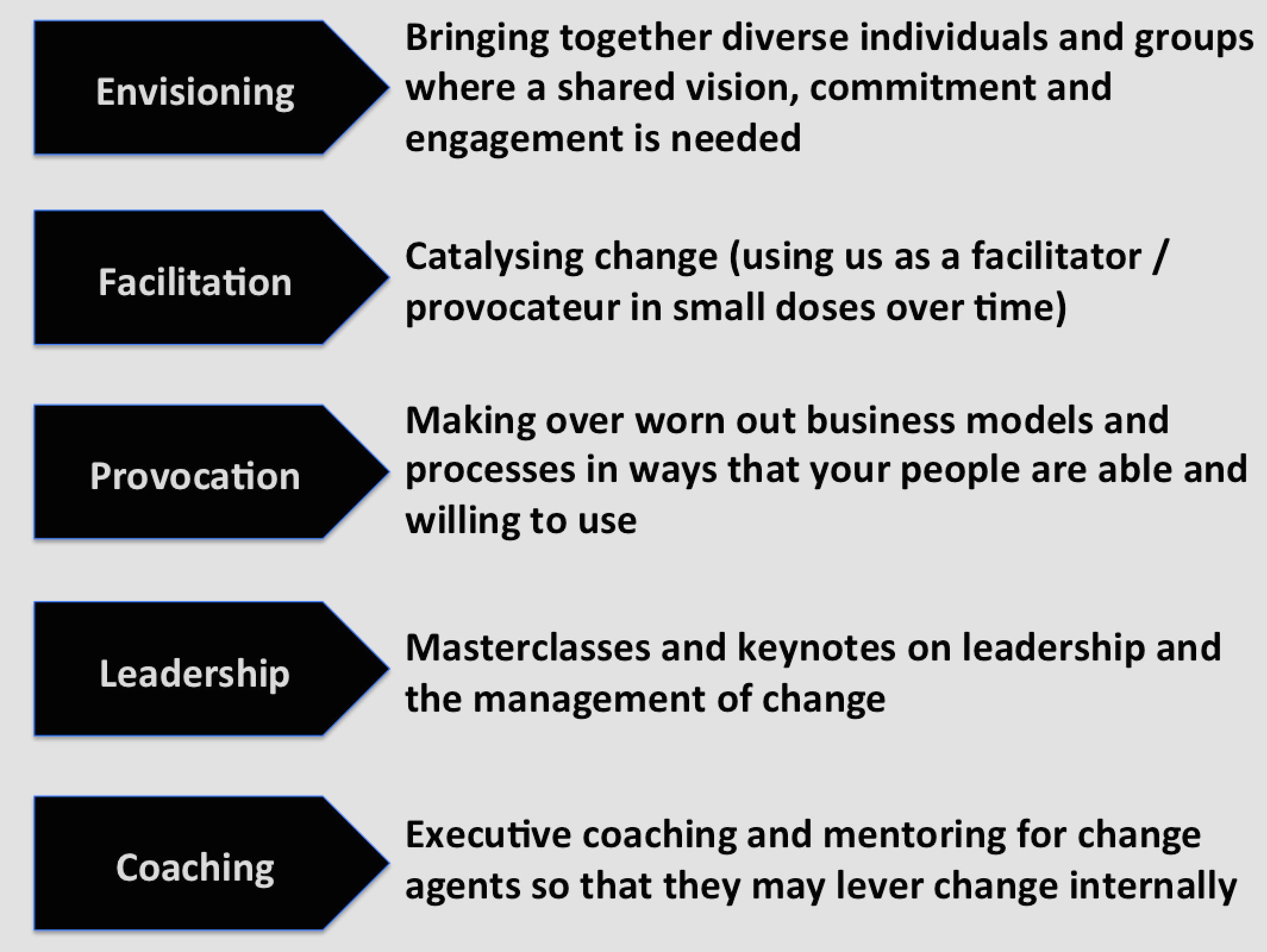
The rate and amount of change requires people and companies to change and adapt continuously. Change mastery results in faster and higher quality execution of strategy, significant cost savings through waste reduction, seizing first mover advantage where appropriate, greater employee engagement and high performance. Human Dynamics can help in the following areas:
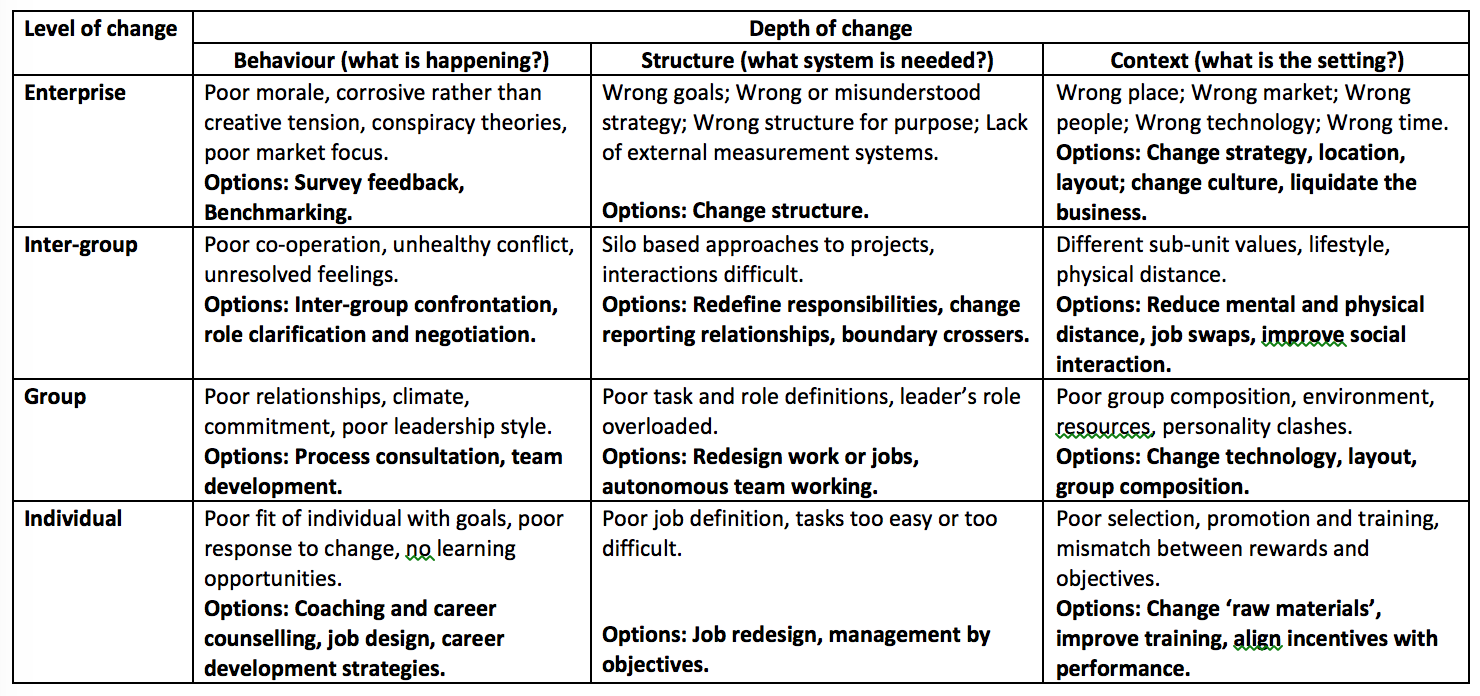
We are keen advocates of a best-fit approach to change management, having seen how attempts to use a 'plug and play' approach to the subject fail (akin to assuming change is like a memory stick in a computer). We prefer a strong analysis to pinpoint needs and desired outcomes up front, which saves considerable time, money and wasted effort later on. The Organisation Development Matrix is a helpful tool to inform where to target your efforts. Extract taken from our new book for Bloomsbury 'Leading Innovation, Creativity and Enterprise':

Case Study: Making mergers work
Situation
Our client was a specialist team within the pharmaceutical company GSK. The team had come together from different areas of the company and there were different sub-cultures arising from the different organisations resulting in low levels of co-operation and avoidance of contentious issues around integration of work and projects. This resulted in wasted effort, in-fighting and other 'toxic' behaviours which threatened the group's viability and ultimately its contribution to the company.
The client requirement
To rapidly reform the team, find zones of collaboration and build a climate of trust.
What we did
Designed and facilitate bespoke team development in partnership with the team.
Impact
The work explicitly addressed the question of cultural differences in a positive way and answered the question as to what advantages there were in working as a team of specialists, both practically and emotionally. It also put an end to many of the toxic behaviours that led over time to more effective team performance.